
scarlet firethorn - red firethorn

red firethorn

Pyracantha coccinea

South Korea

$12.00 ● In Stock

Source Data

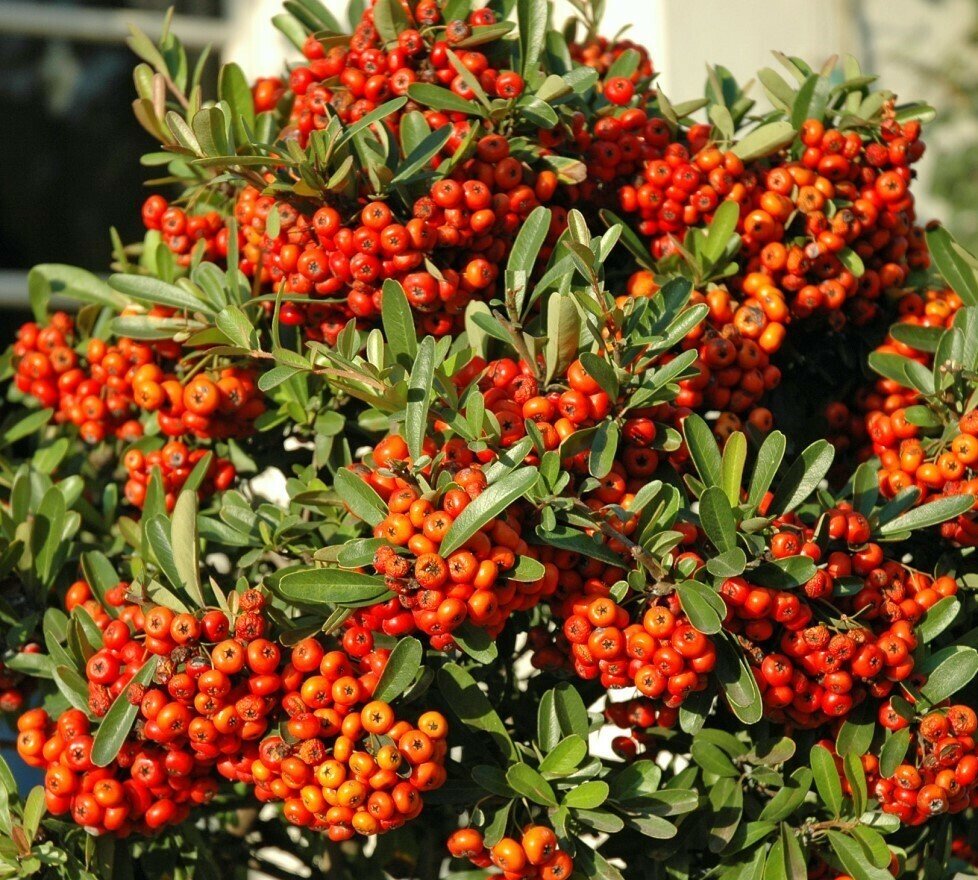
Pyracantha coccinea fresh seeds, Scarlet firethorn, Red firethorn, Burning bush seeds, Red berries, Ornamental privacy shrub (lat. Pyracantha coccinea).

A species of flowering plants of the genus Pyracantha (Pyracantha) of the Pink family (Rosaceae). An evergreen densely branching shrub 2-5 m high, with a spreading crown and reddish-brown prickly branches. Inflorescences and young shoots are pubescent. The leaves are elliptical or lanceolate, 2-4 cm long, more or less pointed, with a wedge-shaped base, serrated along the edge, glabrous, slightly pubescent at first. The petiole is also pubescent, 2-5 mm long.

The inflorescence is thick, more or less pubescent. The flowers are small, white and pinkish-yellowish, with funnel-shaped hypanthium, triangular sepals, red anthers.

The fruit is a berry of 5-7 mm in size, from bright red to yellow (the color is due to the content of carotenoids), they stay on the plant for a long time. In winter, the fruits are often eaten by birds. Flowering in June, fruiting from September.

Pyracantha bright red is grown as an ornamental plant. Grows on dry, heavy soils, suitable for growing in industrial areas.
Instructions

  1. Growing scarlet firethorn - red firethorn (Pyracantha coccinea) from seed is a rewarding process. Follow these guidelines for best results.
  2. Seed Preparation: Cold stratification is required. Place seeds in moist sand or vermiculite in a sealed bag and refrigerate at 1–5°C for 4–8 weeks before sowing. Some species may require 60–90 days of cold stratification for optimal germination.
  3. Sowing: Sow seeds 0.5–1 cm deep in well-draining seed compost mixed with sharp sand or perlite. Water gently and keep in a cold frame or unheated greenhouse at 18–22°C.
  4. Germination: Seeds may germinate over 2–8 weeks depending on species. Some conifers require a warm period (20°C for 4 weeks) followed by cold stratification before germination will occur.
  5. Transplanting: Transplant seedlings into individual pots once they have 2–3 pairs of true leaves. Harden off gradually over 7–10 days before planting in final position. Space according to the mature size of the species.
  6. Aftercare: Keep soil evenly moist, especially during the first growing season. Apply a layer of mulch around the base to retain moisture and suppress weeds. Protect from strong winds until established.
  7. Hardiness: Hardy in most temperate climates. Suitable for USDA zones 4–8 depending on species. Established plants can tolerate winter temperatures well below freezing.

Gallery

Reviews

No reviews yet. Be the first to review!

Write a Review

Questions & Answers

No questions yet. Ask the first!

Ask a Question