 Green Legacy Seeds
small bitter gourd karela
momordica charantia

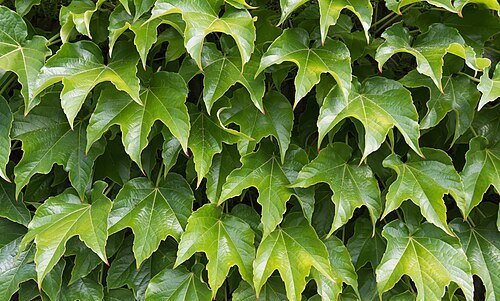
Parthenocissus tricuspidata
South Korea
Japanese walnut, Juglans sieboldiana
Tree up to 20-23 m in height and up to 50 cm in diameter. The bark is thick, dark gray or grayish-brown with numerous deep longitudinal cracks. Young branches are thick, red-brownish-green, densely pubescent, lentils are small and numerous.
The leaves are large, 40-100 cm long, with 11-12 leaflets. The apical leaflets are lanceolate-oblong, elliptical, broadly oval or oval, often pointed, up to 12 cm long and 7 cm wide; the lateral leaflets are sessile, almost opposite, obovate-oblong or oval, pointed at the end, from 3.5 to 15 cm long and 2.5-5.5 cm wide, sharply toothed with dense stellate pubescence. Staminate catkins are 15-30 cm long.
Walnut with two longitudinal ribs, 2-4 cm long, with a hairy, sticky surface, in hanging clusters, up to 20 pieces.
Life expectancy is 200-300 years. It grows, compared to the less valuable Manchurian nut, somewhat more slowly. One of the very winter-hardy representatives of the nut family. It is distinguished by its ability to purify the air from gasoline and acetylene vapors. Therefore, this species, like other types of nuts, is especially advisable to plant in places contaminated with these secretions.
Grows well in nutritious, loose, well-drained soil.
USDA Hardiness Zone: 4 (-34°C to -29°C).
No reviews yet. Be the first to review!
No questions yet. Ask the first!
