 Green Legacy Seeds
Thuja orientalis 'Nana Aurea'
Thuja orientalis f. aurea nana

Pinus wallichiana
Himalayas
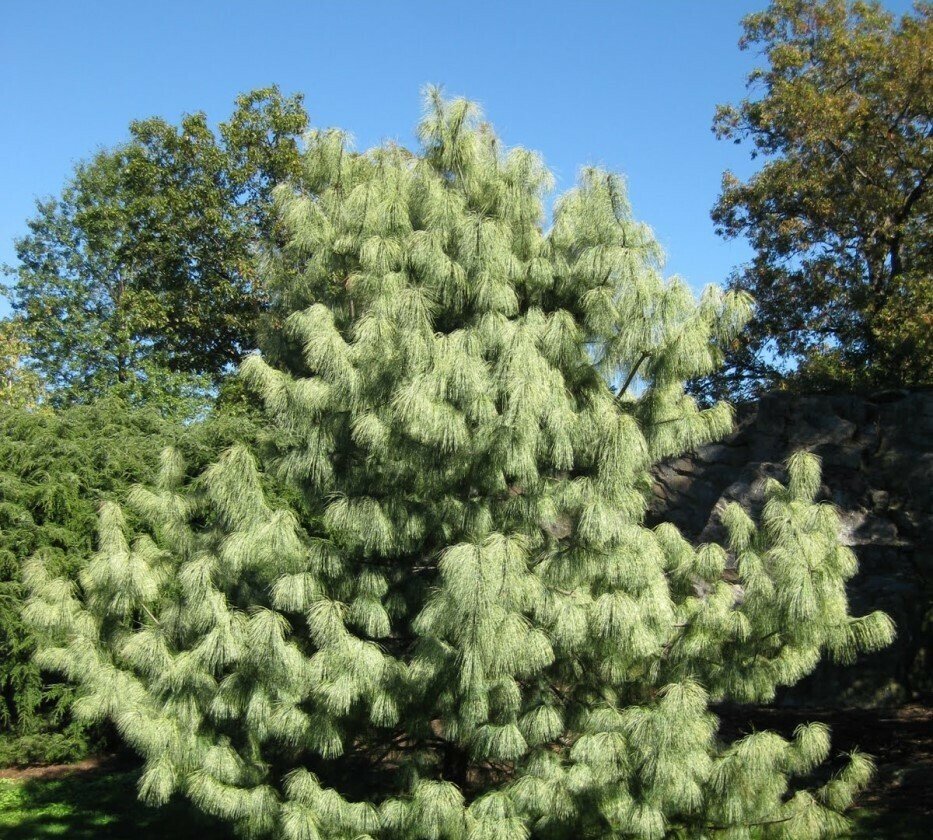
Himalayan white pine (Bhutanese pine, Wallichian pine, Pinus wallichiana)
A species of gymnosperms of the genus Pine. Tree 30-50 m high. Life expectancy is about 300 years.
The crown is loose, wide-pyramidal, and consists of long flexible branches that begin to form at the very bottom of the trunk. The needles are very long (up to 20 cm), gray or bluish-green with a silvery tint, thin (1 mm), collected in bunches of several pieces, stored on the tree for 3-4 years.
The bark is smooth, dark gray in color, in adults it takes on an ashy tone, and contains numerous detachments and cracks.
The cones are red or light brown, 32x7 cm in size, cylindrical in shape; in some conifers they are straight, in others they are curved. Seeds are 5-6 mm long, with a 20-30 mm wing.
The plant is valued for its decorative qualities. Resistant to cold and disease, but does not tolerate dry and hot climates.
Resistant to cold and disease, but does not tolerate dry and hot climates. It is not demanding on soil, but develops well on moderately moist and fertile drained substrates. The plant is light-loving; it is important to provide enough space around it. The first year must be protected from frost and the spring sun (in active sun the needles can burn) with the help of coniferous spruce branches, burlap or other material.
USDA Hardiness Zone: 5 (-29°C to -23°C).
No reviews yet. Be the first to review!
No questions yet. Ask the first!


