 Green Legacy Seeds
dwarf lilyturf - mondograss - fountainplant
Ophiopogon japonicus

Ocimum basilicum
India
Thai sweet basil (Ocimum basilicum var. thyrsiflora)
Thai sweet basil in the world can be found under many names. In the West, it is sometimes called licorice basil or anise basil, although there are other varieties of basil that are also referred to by these names. This is due to the fact that this herb in ancient times was mainly used to treat diseases exclusively for royals and was often added to baths to preserve their health.
Thai sweet basil in places of natural growth is a perennial (more often – biennial) herbaceous plant or a branched semi-shrub, reaching 30-45 cm in height, with leaves from 2 to 5 cm.
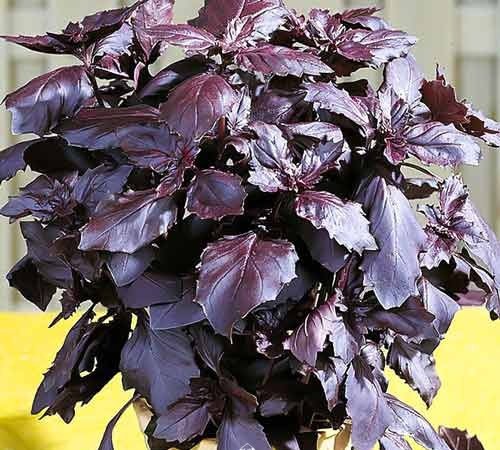
This Thai basil in its appearance is noticeably different from its Western and European relatives. First, with its small leaves - much smaller than the usual Mediterranean basil and not so round. Secondly, the stems of Thai basil are purplish-purple in color, and the color becomes more saturated as the plant grows. The stems contrast very effectively with the green leaves, and the flower buds are reddish-purple or purple. Both the leaves and flowers are edible and have a strong basil smell with an equally strong hint of anise or licorice. Among the different varieties of Thai sweet basil, the most popular varieties in the world are Queenette and Siam Queen. As for the taste, Thai basil has gained its huge popularity thanks to an amazing spicy note, which is indescribably perfectly combined with some sweetness, akin to the sweetness of licorice and anise. Culinary gurus note that the taste of Thai basil is much more complex and exciting than that of its European relative.
Like its Mediterranean sibling, Thai sweet basil is a rich source of vitamin A. This vitamin is essential for eye health and maintaining healthy skin. In addition, foods with this vitamin are known to help protect the body from lung and mouth cancer.
Thai basil also has a high content of vitamin K, which the human body needs to maintain normal blood clotting and increase bone strength. And the content of vitamin C in Thai basil is quite high.
Both the Mediterranean and Thai versions of basil contain a large amount of iron, which is necessary for the body to produce hemoglobin. Basil also contains other minerals such as potassium, calcium, manganese, and magnesium, and is a good source of dietary fiber.
Thai basil also contains various essential oils, including eugenol and limonene. These oils are antioxidants with antimicrobial properties.
No reviews yet. Be the first to review!
No questions yet. Ask the first!


