
Wild strawberry - Alpine strawberry

Alpine strawberry

Fragaria Vesca

Russia

$10.00 ● In Stock

Source Data

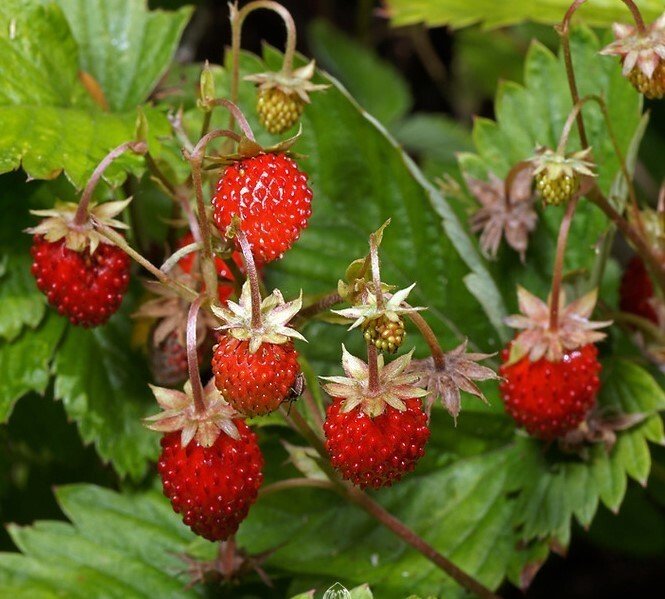
Wild strawberry, or common strawberry (lat. Fragaria vesca).

A species of plants of the genus Strawberry of the Rosaceae family. Perennial, polycarpic, ground-stolon-forming, short-rhizome plant, 5-30 cm high.

The flowers are five-membered, bisexual, white, collected in few-flowered loose umbellate or corymbose inflorescences emerging from the axils of simple, sometimes double, coarsely toothed ovoid leaves.

The fruit is a multi-nutlet, formed from a growing receptacle fused with the calyx, in the pulp of which small nuts are immersed. This fruit is often called “strawberry”.

The most suitable soil for planting and care is loamy or sandy loam chernozem, moderately moist, since strawberries freeze in winter in damp soil.

USDA Hardiness Zone: 4 (-34°C to -29°C).
Instructions

  1. Growing Wild strawberry - Alpine strawberry (Fragaria Vesca) from seed is a rewarding process. Follow these guidelines for best results.
  2. Seed Preparation: Cold stratification is required. Place seeds in moist sand or vermiculite in a sealed bag and refrigerate at 1–5°C for 4–8 weeks before sowing. Some species may require 60–90 days of cold stratification for optimal germination.
  3. Sowing: Sow seeds 0.5–1 cm deep in well-draining seed compost mixed with sharp sand or perlite. Water gently and keep in a cold frame or unheated greenhouse at 18–22°C.
  4. Germination: Seeds may germinate over 2–8 weeks depending on species. Some conifers require a warm period (20°C for 4 weeks) followed by cold stratification before germination will occur.
  5. Transplanting: Transplant seedlings into individual pots once they have 2–3 pairs of true leaves. Harden off gradually over 7–10 days before planting in final position. Space according to the mature size of the species.
  6. Aftercare: Keep soil evenly moist, especially during the first growing season. Apply a layer of mulch around the base to retain moisture and suppress weeds. Protect from strong winds until established.
  7. Hardiness: Hardy in most temperate climates. Suitable for USDA zones 4–8 depending on species. Established plants can tolerate winter temperatures well below freezing.

Gallery

Reviews

No reviews yet. Be the first to review!

Write a Review

Questions & Answers

No questions yet. Ask the first!

Ask a Question