 Green Legacy Seeds
scarlet firethorn - red firethorn
Pyracantha coccinea

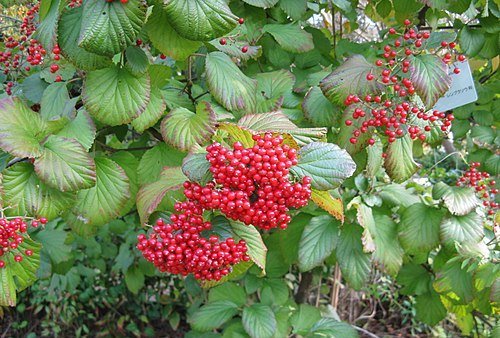
Viburnum dilatatum
South Korea
Carya oval, or shaggy Hickory-Carya ovata
It grows wildly in the southwestern part of North America, reaching 40 m in height at home.
In the literature, it is also mentioned under the names Caria white (not to be confused with Carya tomentosa), as well as shaggy Hickory or shaggy Hickory (due to the peeling bark of the trunk).
The trunk is covered with grayish-brownish, furrowed bark, exfoliating in white layers (hence the name " shaggy Hickory"). Crown oval or oblong-ovate, dense. Leaves of 5 rarely 7 leaflets, first pubescent, then glabrous. The fruits are rounded, up to 6 cm, with a thick outer shell. Nut light brown, unequal, slightly flattened, slightly ribbed.
More frost-resistant than the pecan Caria, withstands temperature drops to -35°C. Photophilic, shade-tolerant in youth. Needs deep, nutritious soil. Used in single, alley and street plantings. In culture since 1629.
Seeds are sown in autumn without preparation or in spring after 3 months of stratification in the sand. Seed quality up to 82%. Soil germination 70 %. The optimal depth of sealing is 3-5 cm.
The kernel of the nut is sweet, fragrant, eaten in the same way as the pecan kernels.
The wood is hard, strong and durable, with a broad white sapwood and a brown or reddish-brown core. Like the wood of other types of Caria, it is used in construction and for the manufacture of various joinery.
Very decorative tree, suitable for both single and group planting.
In nature, it occurs in the Eastern United States and southern Canada, reaching the North to the Great lakes, grows in river valleys, on rocky slopes, on limestone outcrops, usually together with other broad-leaved species (various species of oak, chestnut, frame, beech, mulberry, Linden, maple and Tulip tree).
No reviews yet. Be the first to review!
No questions yet. Ask the first!


