 Green Legacy Seeds
scarlet firethorn - red firethorn
Pyracantha coccinea

Hippophae rhamnoides
Ladakh
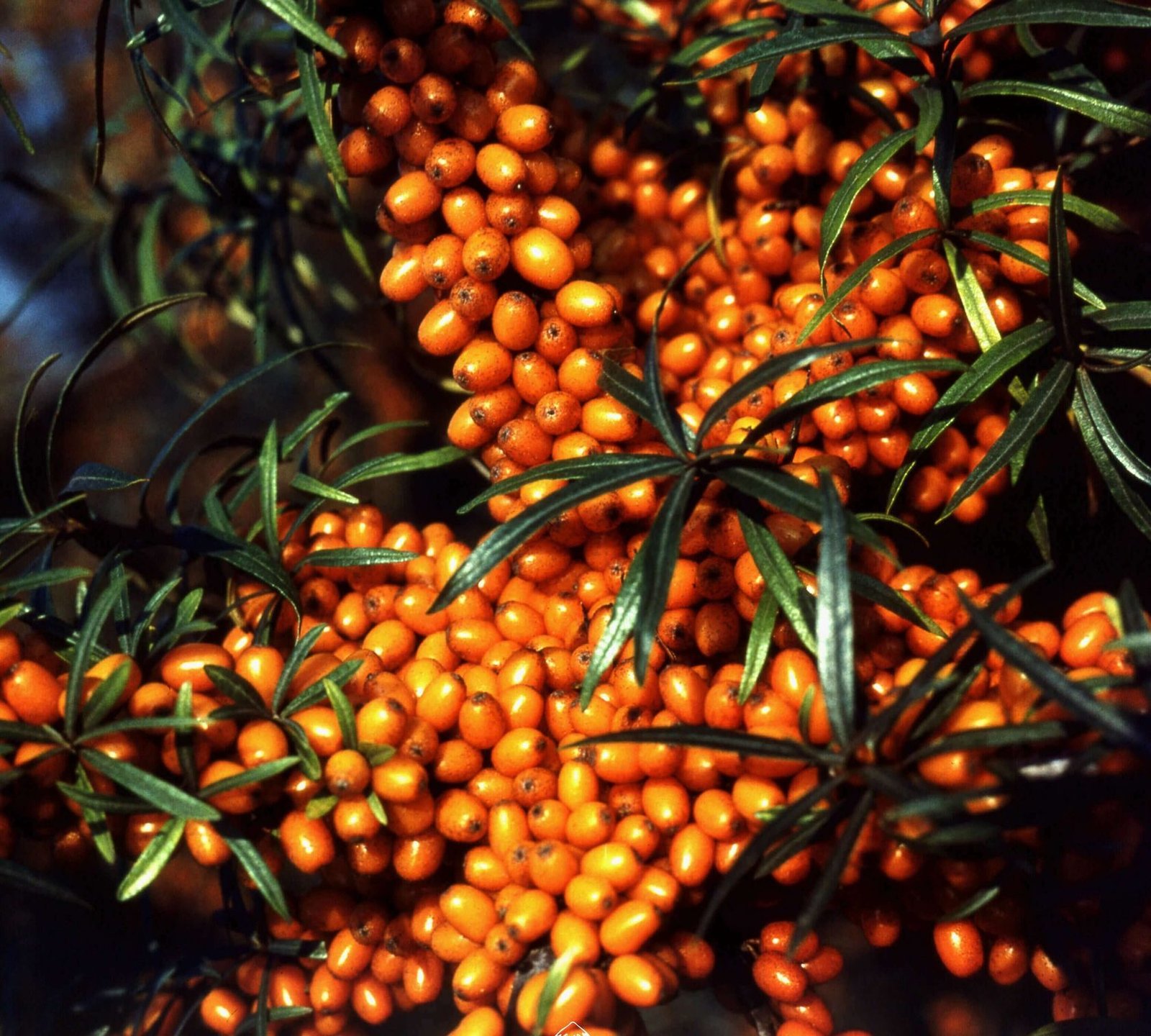
Sea buckthorn buckthorn, or buckthorn (Lat. Hippophae rhamnoídes)
Multi-stemmed deciduous shrub, less often a tree, the height of which usually reaches 1-3 m, and sometimes 3-6 m, up to 15 m. Young shoots are silvery, pubescent; perennial - covered with dark brown, almost black bark. Short shoots with numerous long spines. Shoots of different ages create a round, pyramidal or spreading crown.
The leaves are alternate, simple, linear or linear-lanceolate, grayish-green above, brownish or yellowish-silver-white below.
The fruits are oval or round smooth drupes of yellowish-golden, red or orange color, with one seed, shiny, juicy, with a peculiar taste and smell, reminiscent of the smell of pineapple. The stone is oblong-ovate, sometimes almost black, shiny.
Sea buckthorn blooms in April - May. The fruits ripen in August - September. Fruiting of sea buckthorn begins 3-4 years after planting; on average, one bush produces 10-12 kg of fruit.
Sea buckthorn is a light-loving and frost-resistant plant that can tolerate frosts down to 45 degrees and below. Sea buckthorn prefers loose soils rich in organic matter and phosphorus. In wet areas the plant dies.
USDA Hardiness Zone: 4 (-34°C to -29°C).
No reviews yet. Be the first to review!
No questions yet. Ask the first!


