 Green Legacy Seeds
scarlet firethorn - red firethorn
Pyracantha coccinea

Rosa multiflora himalayan
India
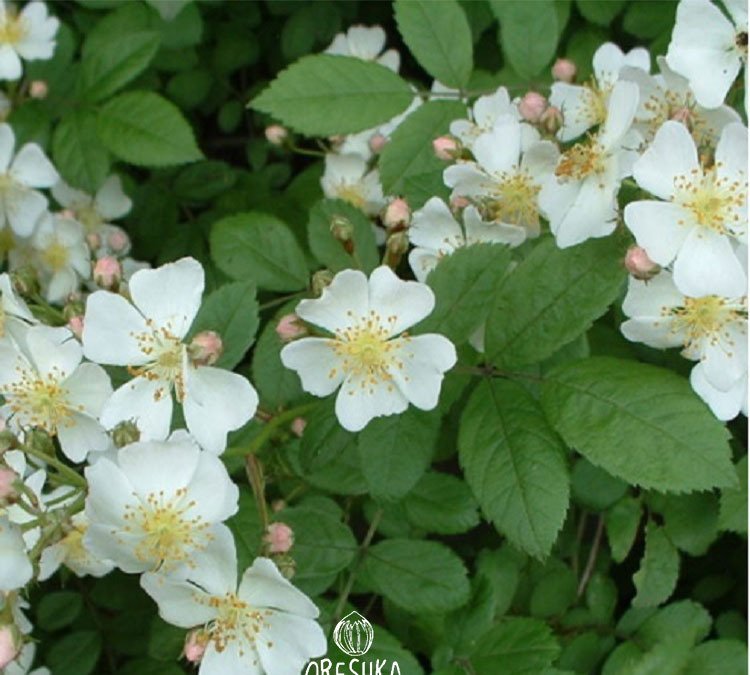
Multi-flowered rose hip, or multi-flowered rose (lat. Rosa multiflora).
A species of deciduous plants belonging to the genus Rosehip (lat. Rosa) of the Rosaceae family. Shrub with long climbing branches. The shoots are long (up to 3 meters), the bark is brown or reddish-green; young shoots are slightly hairy.
The spines are paired, hook-shaped, up to 6 mm. Leaves are 4.5-10 cm long with 5-7 elliptical or obovate leaflets, 2-3 cm long, serrated, glabrous above, pubescent below, often without glands. Stipules are narrow with deep cuts.
Inflorescences are pyramidal-paniculate, multi-flowered. The flowers are 1.5-2 cm in diameter, odorless or with a faint aroma of cinnamon. Petals are white or pink, narrow; sepals are short, pointed, with 1-3 lateral feathers, deflecting downwards during fruits and falling off early. Pedicels are pubescent, sometimes with bristles, 0.5-1.5 cm long.
The fruits are elliptical, smooth, dark red, about 1 cm in diameter. The nuts are light brown, not pubescent, small, triangular in shape, convex on one side, straight on the other, the convex side has four edges, the surface is rough.
Blooms in early summer, for 30 days. The most abundant flowering is observed in plants growing in sunny places.
It is grown as an ornamental plant and is also used as a rootstock for grafted ornamental rose varieties.
Rosehip multiflorum is light-loving and not picky about soil. During the flowering period and autumn, the plants are highly decorative.
USDA Hardiness Zone: 4 (-34°C to -29°C).
No reviews yet. Be the first to review!
No questions yet. Ask the first!


