 Green Legacy Seeds
Azarole, Mediterranean hawthorn
Crataegus azarolus

Crataegus pinnatifida
South Korea
Crataegus pinnatifida fresh seeds, Mountain hawthorn, Chinese haw, Chinese hawthorn, Chinese hawberry, Red berries, Fruit tree seeds (lat. Crataegus pinnatifida).
A species of the genus Hawthorn (Crataegus) of the Pink family (Rosaceae). A tree or a tall branching shrub up to 6 m high. The bark of the trunk and older branches is dark gray; branches are yellowish-gray, slightly ribbed; shoots are glabrous or slightly pubescent at the beginning; yearlings are brown. The spines are absent or few, straight, 1-2 cm long.
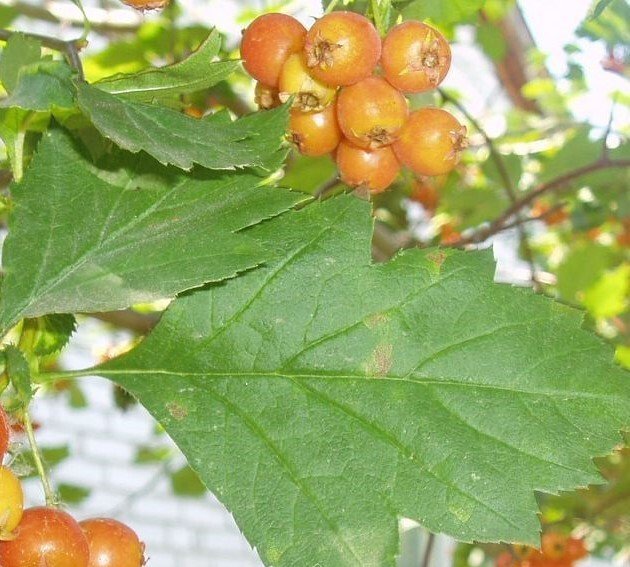
The leaves are bright green above, shiny, glabrous, somewhat paler below, hairy along the veins, ovate or oblong-ovate, with an acute or somewhat truncated apex and a wedge-shaped or low-lying base, deeply pinnately incised, lobed, separate or almost dissected at the base of the leaf.
The inflorescences are drooping, 12-20-flowered, 5-8 cm in diameter, the axes of the inflorescences and pedicels are glabrous, less often, more or less densely pubescent, up to felt. The flowers are 0.8—1.2 cm in diameter, with white petals turning pink towards the end of flowering.
The fruits are almost spherical or somewhat pear-shaped, up to 17 mm long, 15 mm in diameter, bright red, shiny, with whitish warts and red dense flesh. Blooms in May - June for 8-12 days. It bears fruit in August - October. The fruits are edible.
One of the most decorative species of hawthorn, distinguished by bright green, split leaves and shiny red fruits.
No reviews yet. Be the first to review!
No questions yet. Ask the first!


