 Green Legacy Seeds
D
Duchesnea, Mock strawberry, Indian-strawberry
Potentilla indica

Fragaria viridis
Eurasia
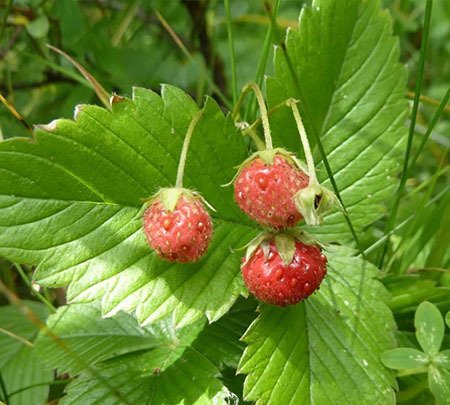
Forest strawberries, or green strawberries (lat. Fragaria viridis), or Polunitsa, or meadow strawberries, or steppe strawberries, or hilly strawberries.
The seeds were collected in the Ural Mountains. Species of the Strawberry genus of the Rosaceae family. A perennial herbaceous plant 5-20 cm high, with a thick brown rhizome. The mustache is short. The stem is thin.
The leaves are oval or ovoid, more diamond-shaped, bluntly toothed, covered with dense hairs below. The inflorescence is irregular, few-flowered. The flowers are bisexual, white, up to 20 mm in diameter. The petals are slightly pointed at the ends and overlap each other with their edges.
The fruit is a multi-nutlet, formed from a growing receptacle fused with the calyx, in the pulp of which small nuts are immersed. The fruits are spherical, weighing 1-2 g, with a tight-fitting cup; when fully ripe, it does not fit. When technically ripe, the color is pink-red with greenish-white areas; when fully ripe, it is cherry-red and has a special aroma.
The soil should have moderate moisture content and a small amount of sand or clay. It is loosened and dug up, the necessary fertilizers are added to it and diligently watered. The soil pH should be close to neutral (that is, no less than 5.5 and no more than 8). Also, the soil should have a high humus content (about 3%).
USDA Hardiness Zone: 4 (-29°C to -34°C).
No reviews yet. Be the first to review!
No questions yet. Ask the first!


