 Green Legacy Seeds
D
Duchesnea, Mock strawberry, Indian-strawberry
Potentilla indica

Rubus chamaemorus
Russia
Cloudberry, Rubus chamaemorus.
Herbaceous or semi-shrub plant up to 30 cm high, with a creeping rhizome. The stems are thin, erect, with two to three leaves and one apical flower with white petals.
The leaves are wrinkled, rounded, kidney-shaped, five-lobed, unevenly crenate along the edge.
Flowers are unisexual, solitary, white. Staminate and pistillate flowers are on different plants; male flowers are somewhat larger. There are five sepals and petals; stamens and pistils are numerous. It blooms in June - July, and after 40-45 days the berries ripen.
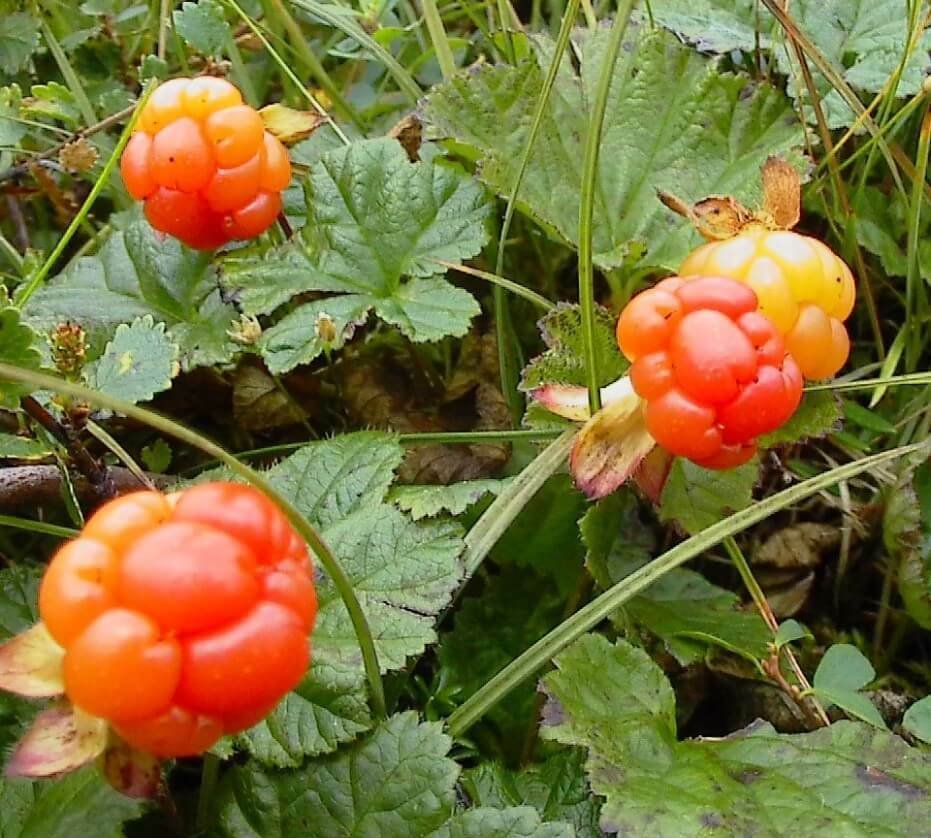
The fruit is a clustered drupe with a diameter of 1.5 cm, shaped like raspberries, but has a special smell and taste. Unripe berries are yellow-red, somewhat creaky, dense, while ripe ones are orange, almost transparent, reminiscent of pure bright amber. The fruits are harvested in July - August, the roots are harvested in late autumn.
Cloudberry is a very finicky crop, and it takes a lot of effort to grow it. Considering that the plant grows on swampy soil in the north, it needs to create approximately the same conditions at the summer cottage. This will require a little more time and effort than when growing cultivated plants.
Sunny meadows on peat and marshy soils are the best place for growing amber berries. Therefore, to successfully cultivate cloudberries at home, it is necessary to create conditions as close to natural as possible. The area intended for planting should be swamped first.
USDA Hardiness Zone 2 (-45 C to -40 C).
No reviews yet. Be the first to review!
No questions yet. Ask the first!


