 Green Legacy Seeds
mountain hawthorn - Chinese haw - Chinese hawthorn
Crataegus pinnatifida

Acer saccharinum
South Korea
Silver maple, sugar maple saccharinum (lat. Acer saccharinum).
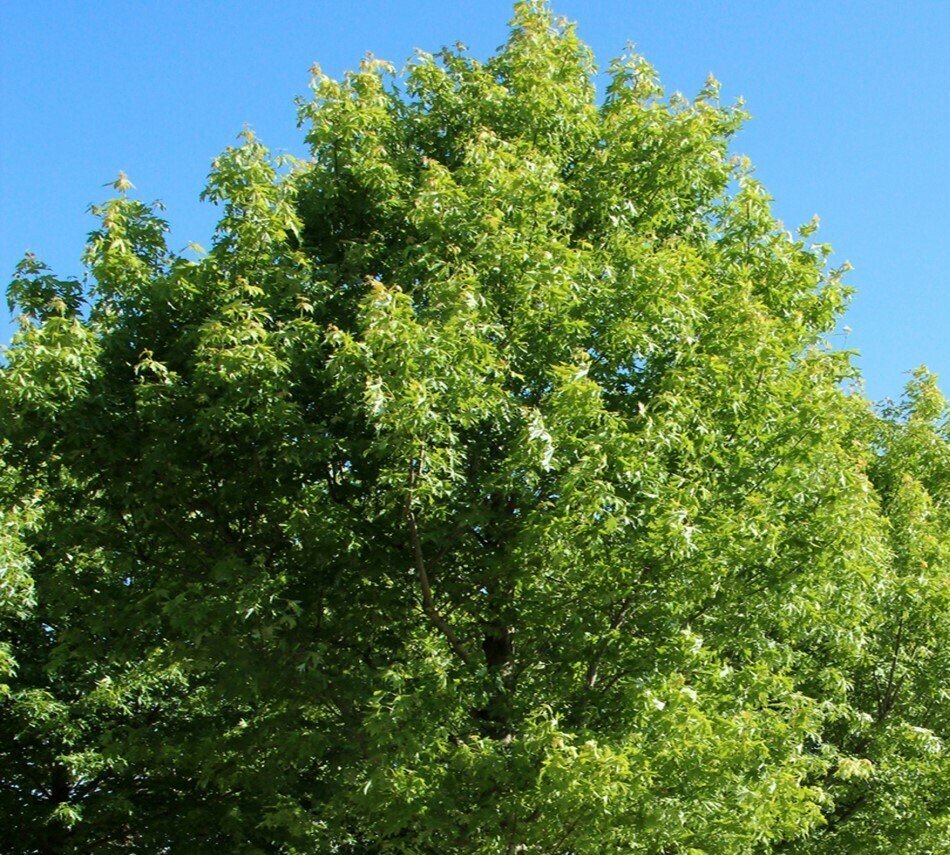
Deciduous fast-growing tree of medium size, 27-36 m high, the trunk is short, near the base it is often divided into several vertical branches. The crown is usually sparse and rounded. The branches are first directed downward, then gracefully bend and go up. The twigs are similar to red maple twigs — with V-shaped leaf scars, only silver maple has stronger, often darker chestnut color and they smell unpleasant at the break.
The bark of young trees is light gray, smooth, darkens with age and is covered with long narrow cracked flake-like scales.
The root system is shallow and fibrous. The buds are reddish-brown with large scales, flower buds are often collected in well-marked clusters.
The leaves are opposite, simple, with five lobes and deep finger-like notches between them, rough-sawed at the edges, 8-16 cm long and 6-12 cm wide, light green in the upper part, pale, silvery-white in the lower. Petioles are thin, 5-12 cm long.
The flowers are monoecious, from greenish to reddish in color, collected in small panicles. The maple blooms in early spring, long before the leaves appear.
The fruit is a lionfish consisting of two identical wings with a seed, the largest among North American species. Each wing is 3.5—5 cm long and up to 12 mm wide. The fruit ripens in late spring and immediately shoots when it gets into the soil. Although the wings contribute to the transfer of the seed over a distance, they (seeds) are quite heavy in this species and partially spread with the help of water flows.
By its morphological properties, Silver maple is close to red maple and can create hybrids with it (Acer × freemanii). Lives up to 130 years and longer.
No reviews yet. Be the first to review!
No questions yet. Ask the first!


