 Green Legacy Seeds
mountain hawthorn - Chinese haw - Chinese hawthorn
Crataegus pinnatifida

Sorbus Aucuparia
Russia
Rowan seeds, Mountain ash, Orange berries, Wizard tree (lat. Sorbus aucuparia)
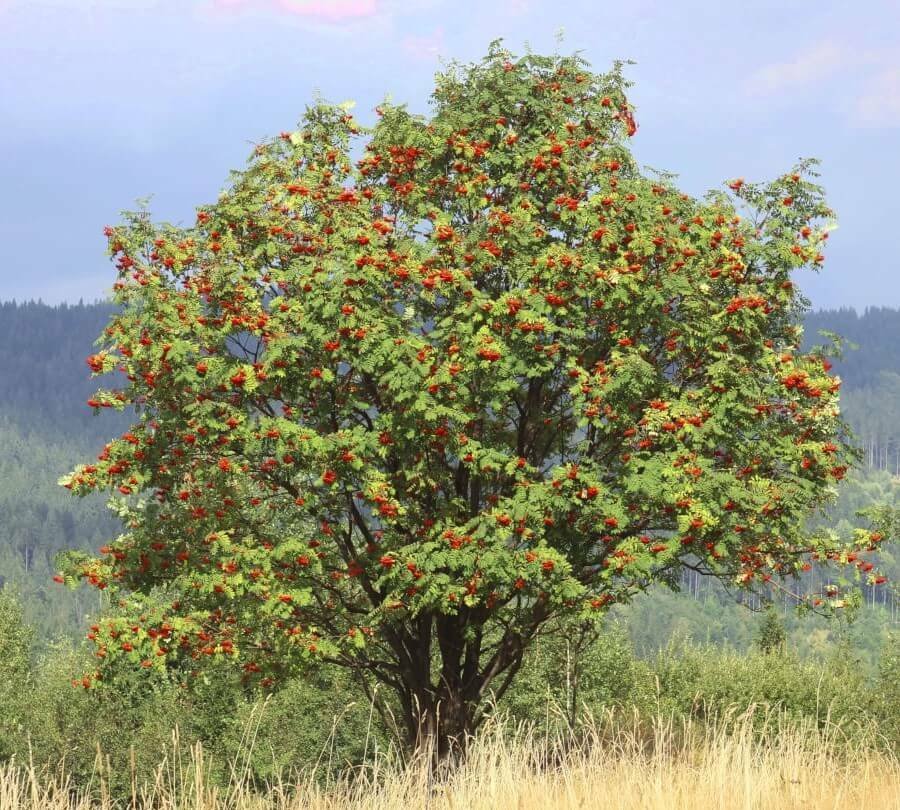
Tree 12 m high (usually 5-10 m). The crown is rounded, openwork (reaches more than 5.5 m in width). The shoots are bare, reddish-brown, covered with a shiny grayish film that is easily erased. Young shoots are grayish-red, pubescent. The bark of mature trees is smooth, light gray-brown or yellow-gray, shiny.
The leaves are up to 20 cm long, consist of 7-15 elongated, pointed, serrated along the edges of the leaflets, entire at the bottom and serrate at the top, green above, usually matte, noticeably paler and pubescent below. In autumn, the leaves turn golden and red.
The flowers are five-membered, numerous, collected in dense corymbose inflorescences up to 10 cm in diameter; inflorescences are located at the ends of shortened shoots. The receptacle is a calyx of five broadly triangular ciliated sepals. The corolla is white (0.8-1.5 cm in diameter), there are five petals, many stamens, one pistil, three styles, the ovary is inferior. When flowering, an unpleasant odor is emitted (the reason for this is trimethylamine gas). Blooms in May - June.
The fruit is a spherical juicy orange-red apple (about 1 cm in diameter) with small seeds rounded along the edge. The fruits ripen in late August - September and remain ripe until winter. Fruits annually, abundantly - after 1-2 years.
It is undemanding to soils, but prefers medium loamy soils with slightly acidic and neutral reaction conditions.
USDA Hardiness Zone: 4 (-34°C to -29°C).
No reviews yet. Be the first to review!
No questions yet. Ask the first!


