 Green Legacy Seeds
mountain hawthorn - Chinese haw - Chinese hawthorn
Crataegus pinnatifida

Carya illinoinensis
India
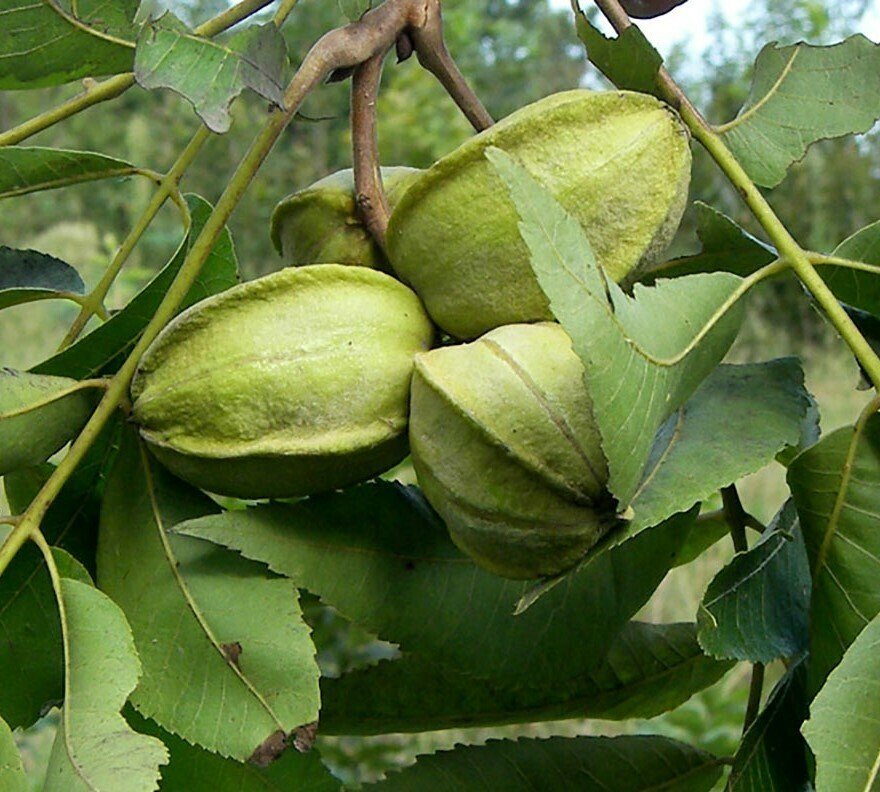
Carya pecan seeds, Pecan nuts, Nuts tree seeds, Pecan tree (lat. Carya illinoinensis).
The deciduous tree reaches 25-40 m in height, with a trunk up to 2-2.5 m in diameter, developing a tent-shaped crown when growing in the wild. The bark is thick, deeply fissured, stratified into plates. The branches are gray or gray-brown, young ones with yellow-brown lenticels. The shoots are densely pubescent.
The buds are 6-7 mm long, pubescent and glandular with opposite scales. Leaves are 10-12 cm long and 2.5-7 cm wide.
The nut is 2.5-5 cm long, shiny, dark brown with irregular dark brown spots, sometimes with a point at the top, with a brittle shell and a papery septum. The seed is in a reddish-brown thin shell, with 2 whole cotyledons. Pecans are fattier than many other nuts.
The harvest usually ripens in the second half of October, but the nuts are collected until April.
It can grow both in well-lit areas and in partial shade. Needs fertile, loose soil with good drainage. It is also important that there is no water on the site, and that the soil has good air and water permeability.
USDA Hardiness Zone: 5 (-29°C to -23°C).
No reviews yet. Be the first to review!
No questions yet. Ask the first!


