 Green Legacy Seeds
mountain hawthorn - Chinese haw - Chinese hawthorn
Crataegus pinnatifida

Psidium guajava
India
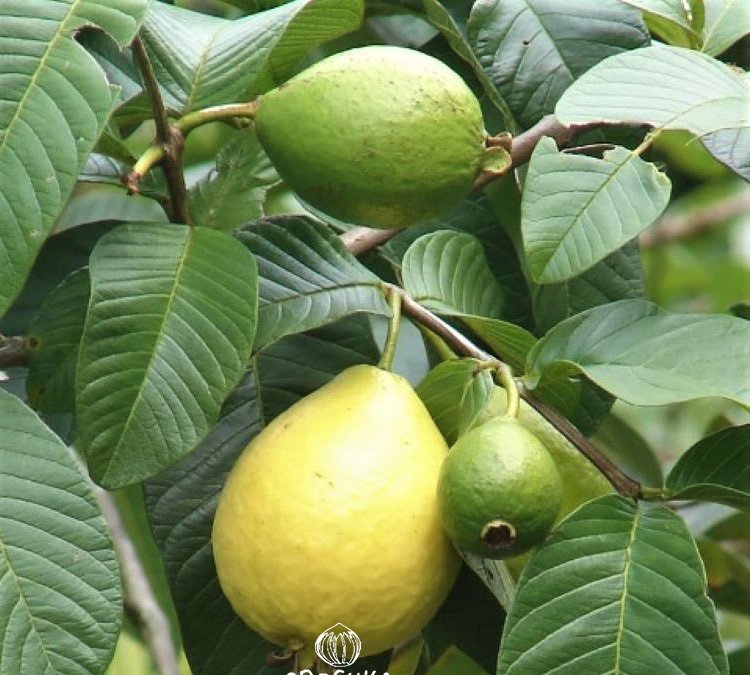
Guajava (guava, guyava, psidium guajava)
A low evergreen plant that does not grow above 4 meters, with a spreading crown. The bark is thin, smooth, pale pink in color, sometimes it can be covered with cracks.
The leaves are dark green, large, oval, with an even edge, slightly pubescent on the underside.
It can bloom once or twice a year. The flowers are arranged singly or in small inflorescences, white, very fragrant. These flowers are pollinated mainly by bees.
The fruits ripen 3-5 months after flowering. The fruits are round or pear-shaped. Sizes can vary from apricot to grapefruit. They have a pleasant smell, the color of the peel is yellow, yellowish-white or greenish. Different varieties have white, pink or red flesh, and some also have red (instead of green or yellow) skin. The pulp contains a large number of seeds.
They are used raw and in the form of jams, for flavoring desserts, for making juices, cocktails, sauces, salads and drinks.
It is unpretentious to the conditions and to the soil. A large amount of sunlight is needed. The optimal temperature for growing guava is 20-25 degrees. It is also necessary to protect the plant from drafts and sudden temperature changes. In winter, it is best to put the plant at rest, lowering the temperature to 8 degrees. In summer, you can take out a pot with a tree on the balcony or in the garden.
No reviews yet. Be the first to review!
No questions yet. Ask the first!


