 Green Legacy Seeds
mountain hawthorn - Chinese haw - Chinese hawthorn
Crataegus pinnatifida

Prunus armeniaca
India
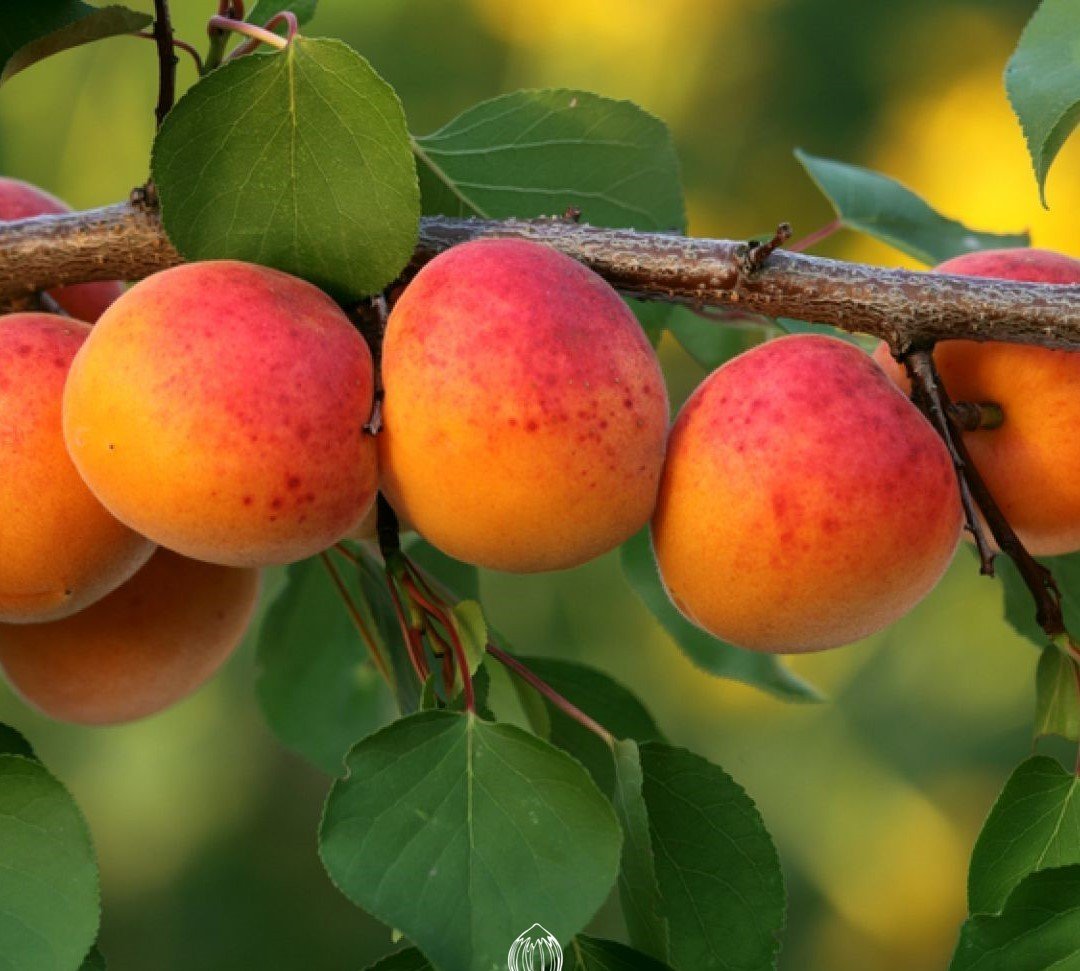
The common apricot (Latin: Prúnus armeniáca) is a fruit tree; it is a species of Plum in the Rose family (Rosaceae), as well as the fruit of this tree, which is the source of several types of dried fruits, primarily dried apricots, as well as apricots.
Other common names of apricot — celtoslavica, Morel, gerdel.
Deciduous tree of medium height (5-8 m) and crown circumference. The bark on old trunks is gray-brown longitudinally cracking.
Fruits-juicy single-walled yellowish-red ("apricot") color, rounded in outline, elliptical or obovate, with a longitudinal groove. The bone is thick-walled, smooth or rough. The skin is velvety-pubescent, from yellow to orange, usually with a reddish one-sided "tan"; the fruit pulp in cultivated varieties is sweet, juicy or dry, in wild — growing varieties-coarse-fiber with a bitter taste. Seeds are flat, obovate, with a dense light brown skin. The weight of the fruit in wild forms is 13-18 grams. It bears fruit in June and August.
Trees are resistant to drought (due to deep root penetration) and can be grown in hot regions with minimal precipitation.
In its wild form, the common apricot has been preserved only in the Himalayas, the Tien Shan and the Western part of the North Caucasus.
In the wild on the territory of Russia grow closely related species of Siberian apricot and Manchurian apricot.
It is used for rootstock and can grow in the middle of Russia, Southern Siberia and Primorsky Krai, as well as southern regions.
No reviews yet. Be the first to review!
No questions yet. Ask the first!


