
Butternut squash

Butternut squash

Cucurbita moschata

South Korea

$11.00 ● In Stock

Source Data

Butternut Pumpkin.

The famous nutmeg pumpkin variety that came to us from Mexico.

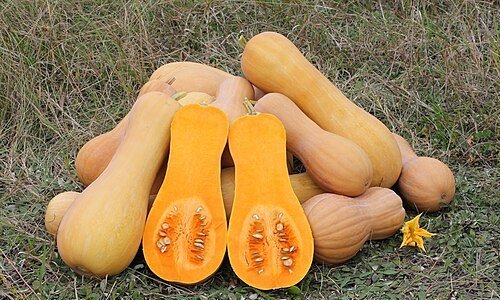
This is an incredibly tasty vegetable, has a yellow-brown color and a very small number of seeds. The weight of a mature fruit is about 2.5 kg. Its pulp is incredibly tasty and healthy with a light nutmeg taste. There are no veins in the pulp, so pumpkin is most often consumed fresh. The flavor of the pumpkin becomes more intense as it sits.

Externally, the pumpkin resembles an elongated oval with a larger base.

And the plant itself is a weaving bush that can spread along the ground or trail onto a support.

The flowering period occurs in the summer, and by autumn the fruits ripen.

Use - universal.
Instructions

  1. Growing Butternut squash (Cucurbita moschata) from seed is a rewarding process. Follow these guidelines for best results.
  2. Seed Preparation: Cold stratification is required. Place seeds in moist sand or vermiculite in a sealed bag and refrigerate at 1–5°C for 4–8 weeks before sowing. Some species may require 60–90 days of cold stratification for optimal germination.
  3. Sowing: Sow seeds 0.5–1 cm deep in well-draining seed compost. Water gently and keep consistently moist but not waterlogged. Place in a bright location at 18–22°C.
  4. Germination: Seeds typically germinate in 2–12 weeks after stratification. Germination may be sporadic — do not discard pots if no seedlings appear within the expected timeframe.
  5. Transplanting: Transplant seedlings into individual pots once they have 2–3 pairs of true leaves. Harden off gradually over 7–10 days before planting in final position. Space according to the mature size of the species.
  6. Aftercare: Water regularly during the first growing season. Apply a balanced fertilizer in spring. Mulch annually to retain moisture and suppress weeds. Prune as needed to maintain shape.
  7. Hardiness: Hardy in most temperate climates. Suitable for USDA zones 4–8 depending on species. Established plants can tolerate winter temperatures well below freezing.

Gallery

Reviews

No reviews yet. Be the first to review!

Write a Review

Questions & Answers

No questions yet. Ask the first!

Ask a Question