
Ashwagandha - Indian Ginseng

Indian Ginseng

Withania somnifera

India

$11.00 ● In Stock

Source Data

Ashwagandha, Indian ginseng, Physalis sun-leaved (lat. Withania somnifera).

An evergreen shrub, reaching a height of up to 1 m and a width of up to 0.5 m. Suitable for indoor cultivation.

The leaves are simple, oval-shaped, 5-10 cm long.

The flowers are bell-shaped, greenish-yellow.

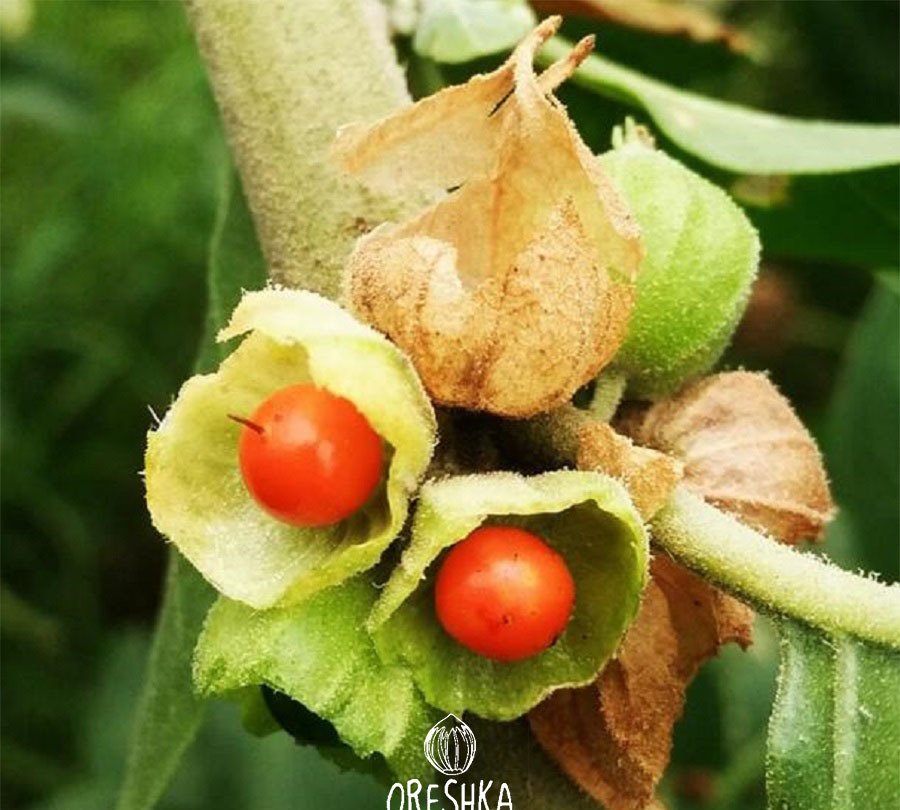
The fruits are berries of orange or red color, enclosed in capsules resembling lanterns.

The fruits, roots, leaves and bark are used for medicinal purposes.

Despite the fact that all parts of the plant are useful, the ashwagandha root is a storehouse of useful substances, and it is a universal remedy for many diseases.

Prefers well-drained soils. It is better to choose a sunny, wind-protected place for planting. It is not very cold-resistant, but can be grown as an annual, flowering and bearing fruit in the first year after planting (in this case, seedlings are grown first).
Instructions

  1. Growing Ashwagandha - Indian Ginseng (Withania somnifera) from seed is a rewarding process. Follow these guidelines for best results.
  2. Seed Preparation: Cold stratification is required. Place seeds in moist sand or vermiculite in a sealed bag and refrigerate at 1–5°C for 4–8 weeks before sowing. Some species may require 60–90 days of cold stratification for optimal germination.
  3. Sowing: Surface sow or cover very lightly with fine vermiculite. Seeds need light for germination. Keep soil moist but not waterlogged at 18–22°C.
  4. Germination: Seeds typically germinate in 2–12 weeks after stratification. Germination may be sporadic — do not discard pots if no seedlings appear within the expected timeframe.
  5. Transplanting: Transplant seedlings into individual pots once they have 2–3 pairs of true leaves. Harden off gradually over 7–10 days before planting in final position. Space according to the mature size of the species.
  6. Aftercare: Pinch out growing tips to encourage bushier growth. Harvest regularly to promote continued production. Most herbs prefer full sun and well-drained soil. Protect from excessive rainfall.
  7. Hardiness: Hardy in most temperate climates. Suitable for USDA zones 4–8 depending on species. Established plants can tolerate winter temperatures well below freezing.

Gallery

Reviews

No reviews yet. Be the first to review!

Write a Review

Questions & Answers

No questions yet. Ask the first!

Ask a Question