
American pokeweed - pokeroot - pokeberry - American poke

pokeroot

Phytolacca americana

India

$11.00 ● In Stock

Source Data

Laconosa americana (Latin Phytolacca americana), or Phytolacca americana, or Phytolacca decandra (Latin Phytolacca decandra), fatty grass, Jewish ivy, kermes berries, lentil berries.

Herbaceous perennial up to 3 m tall with a multi-headed short thick rhizome and a fleshy taproot.

The leaves are large, green, simple, opposite, pointed ovate, wedge-shaped-narrowed to the base, whole-cut, 5-40 cm long and 2-10 cm wide, with short angular petioles.

The flowers are bisexual, small (about 0.5 cm in diameter) white, collected in elongated racemes (10-15, up to 30 cm long) at the ends of the shoots. The perianth is simple, with rounded-ovate, blunt, whitish at first, and then reddening lobes. Ten stamens. The ovary is upper. Blooms from June to September.

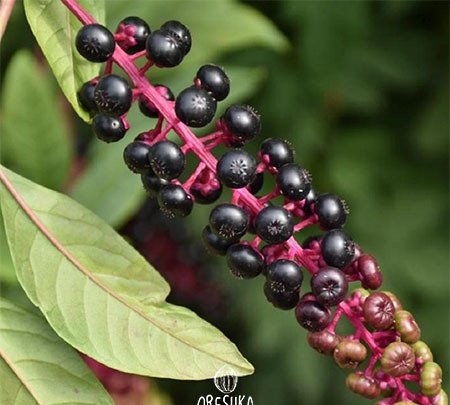
The fruit is a purple-black berry. Mature fruits are rounded. The seeds are reniform-lenticular, about 3 mm long, shiny, black. It bears fruit since August.

It is undemanding to the composition and acidity of soils. A place for planting is suitable sunny or in partial shade.

USDA Frost Resistance Zone: 4 (-34°C to -29°C).
Instructions

  1. Growing American pokeweed - pokeroot - pokeberry - American poke (Phytolacca americana) from seed is a rewarding process. Follow these guidelines for best results.
  2. Seed Preparation: Soak seeds in warm water for 12–24 hours before sowing to soften the seed coat. Discard any floating seeds as they are likely non-viable.
  3. Sowing: Sow seeds 0.5–1 cm deep in well-draining seed compost. Water gently and keep consistently moist but not waterlogged. Place in a bright location at 18–22°C.
  4. Germination: Seeds typically germinate in 2–8 weeks. Keep soil consistently moist during germination. Once seedlings emerge, gradually increase ventilation.
  5. Transplanting: Transplant seedlings into individual pots once they have 2–3 pairs of true leaves. Harden off gradually over 7–10 days before planting in final position. Space according to the mature size of the species.
  6. Aftercare: Water regularly during the first growing season. Apply a balanced fertilizer in spring. Mulch annually to retain moisture and suppress weeds. Prune as needed to maintain shape.
  7. Hardiness: Hardiness varies by species and growing conditions. Young plants may need protection from extreme temperatures. Acclimatize gradually to outdoor conditions.

Gallery

Reviews

No reviews yet. Be the first to review!

Write a Review

Questions & Answers

No questions yet. Ask the first!

Ask a Question