 Green Legacy Seeds
Butternut squash
Cucurbita moschata

Cicer arietinum
India
Turkish Chickpeas (Cicer arietinum)
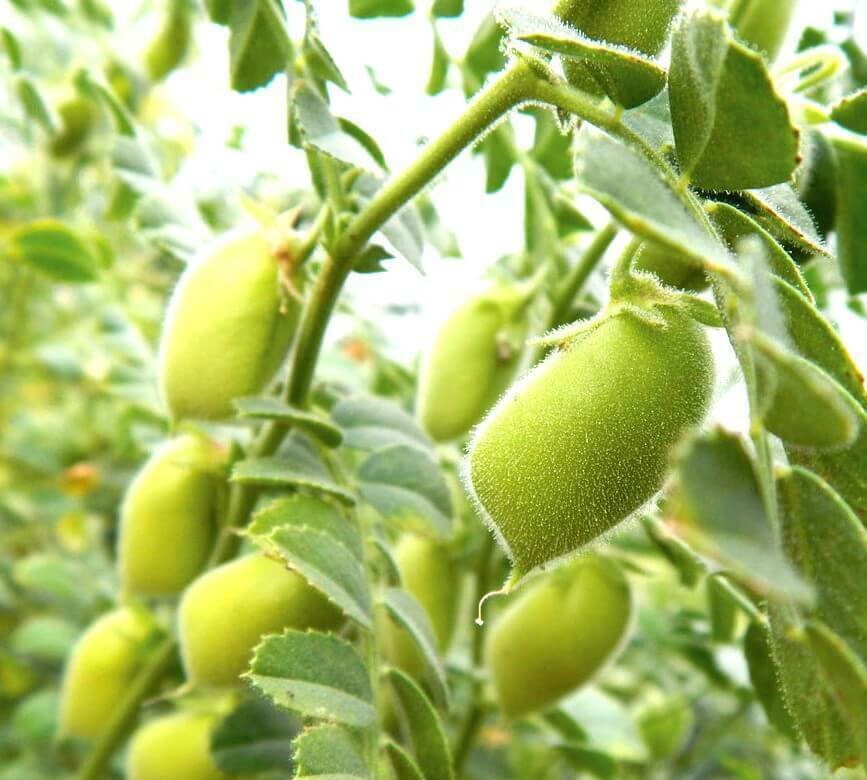
The stem is erect, covered with glandular hairs. The leaves are unpaired. It reaches a height of 20-70 cm. The struts are short, swollen, contain from 1 to 3 grains, a lumpy-rough surface. Color - from yellow to very dark. The weight of 1000 seeds varies between 150 and 300 g, depending on the variety.
Turkish peas are thermophilic, self-pollinating plants, pollination occurs in the closed flower phase, sometimes cross-pollination. The growing season is 90-110 days for early-maturing varieties and up to 150-220 days for late-maturing varieties. Germination begins at a temperature of 3-5 °C, seedlings can withstand short-term frosts up to 8-11 °C. During the flowering period — the formation of beans, the optimal temperature should be from 24-28 °C.
The birthplace of chickpeas is considered to be the cultural center of Central Asia. The plant is cultivated in the countries of Central and Central Asia, East Africa, Eastern Europe, India, and the Mediterranean region.
It is believed that chickpeas were known and used by humans for food long before the beginning of our era. So in Greece, chickpea peas were found, the age of which is not less than 7.5 thousand years, and in Iraq, chickpea seeds dating back to the "Bronze" Age were preserved. In ancient times, chickpeas were often used not only as food, but also as medicine.
No reviews yet. Be the first to review!
No questions yet. Ask the first!


